One cleaning technology that has proven effective at killing norovirus pathogens is electrostatic sprayers
While it has not gotten much attention due to the coronavirus, we are now in norovirus “season.?
Most cases of norovirus occur between November and March of each year. Many public health officials believe this is because people tend to be indoors, in closed, crowded environments, giving the virus more chances to spread during this time of year.
Norovirus outbreaks can happen anywhere: in schools, offices, restaurants, and many other types of commercial facilities. Further, they happen more on land than at sea. It is highly contagious and typically spreads when someone who has the disease touches surfaces that are then touched by others. This is a common form of cross-contamination.
Those infected usually show symptoms of the disease very quickly. For instance, several years ago, a catering company in the Chicago area prepared a business lunch for a gathering of 80 people. It was later determined that one member of the kitchen staff had norovirus. Within hours of the event, 44 people reported moderate to severe intestinal disease, diarrhea, and what is termed “forceful” vomiting, all common symptoms of norovirus.
It is the forceful vomiting that spreads norovirus. Studies have shown that contaminated droplets become airborne when someone with norovirus vomits, and the droplets can spread as much as 25-feet from the incident. As others inadvertently touch these droplets on a counter, a door handle, a light switch, and then touch their faces, there is a particularly good chance to come down with the disease.
The dangers of cross-contamination have been proven scientifically. A 2017 norovirus study published in Applied and Environmental Microbiology reported that “evidence continues to mount that contaminated environmental surfaces enhance its transmission and intensify the duration and magnitude of outbreaks.”
Therefore, after one of these forceful vomiting events, proper and effective cleaning is so important. It will help reduce, if not stop, the transmission of norovirus. However, this study also reported that “many commonly used surface disinfectants” do not entirely kill or inactivate norovirus.
Often this occurs because cleaning workers do not follow the manufacturer’s instructions, such as adhering to proper contact time-that is, the amount of time the disinfectant must stay wet or “dwell” on a surface before being removed.
Looking for alternatives, the researchers tested chlorine bleach at exceedingly high concentrations, as recommended by the Centers for Disease Control and Prevention (CDC). However, according to the researchers, “this is an unrealistically high concentration for routine use in commercial and institutional settings.”
They went on to say:
There is a need for more effective surface disinfectants having enhanced efficacy against human NoV (norovirus) but with reduced corrosive properties and better safety profiles.
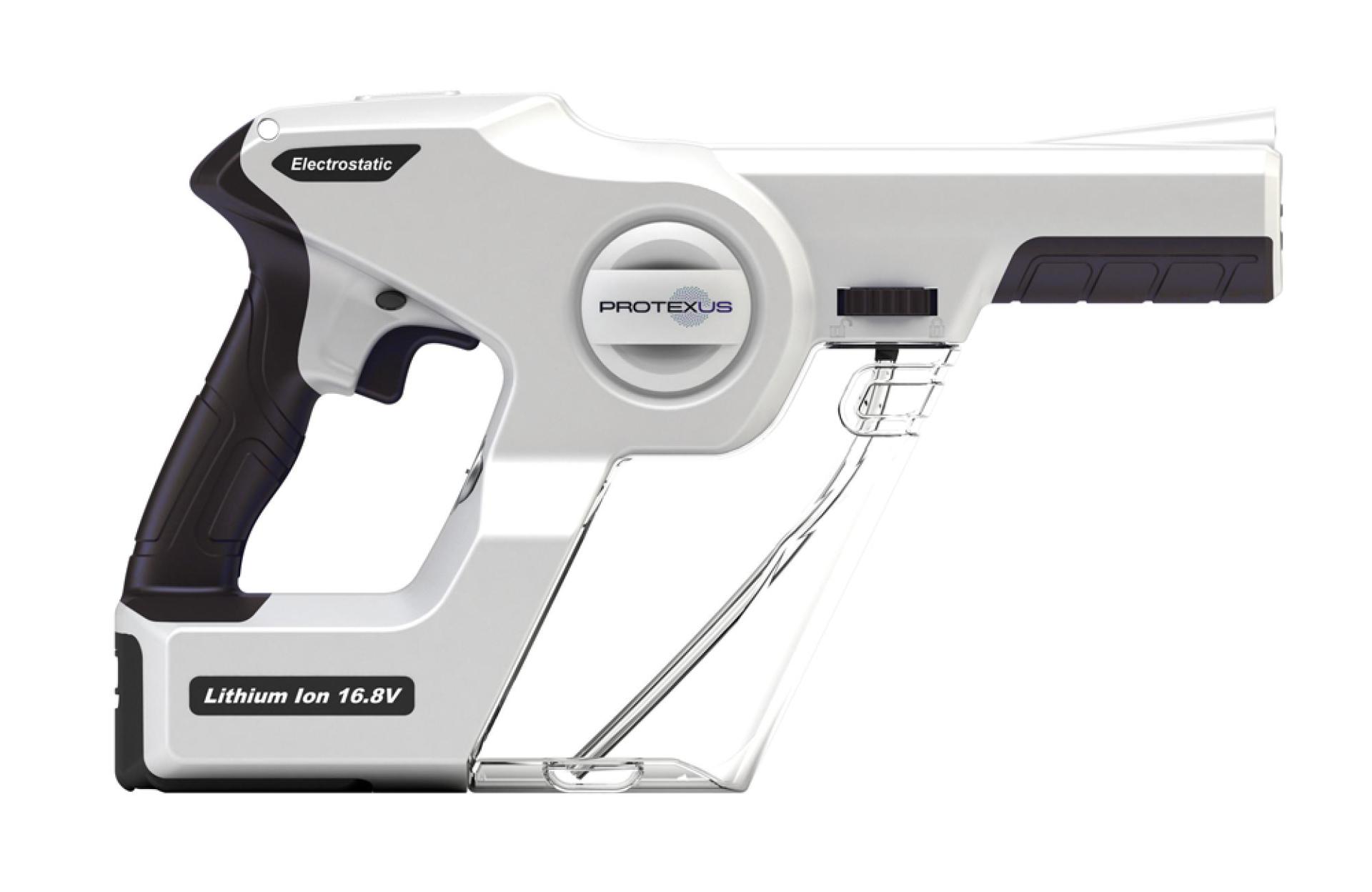
One cleaning technology that has proven effective at killing the pathogens that cause norovirus, as well as those that can cause coronavirus, is the use of electrostatic sprayers, such as those used by Secure Clean. Electrostatic spray disinfecting is the process of spraying an electrostatically charged mist onto surfaces and objects using a handheld device.
Among the benefits of electrostatic sprayers are the following:
•Entire surfaces are covered with a disinfectant, not just specific areas; this is important because, after a forceful vomiting incident, norovirus pathogens can spread high and low and in a wide area, as mentioned earlier.
•Can be sprayed (misted) onto surfaces that are often hard to clean and disinfect, such as keyboards, telephones, high touch areas and surrounding areas, as well as walls and floors.
•Reduces the time to disinfect surfaces, savings that can often be passed on to customers
•Adheres to surfaces for long periods; provides more consistent disinfectant coverage
•Can be used with N-List disinfectants, approved by the EPA to kill the pathogens that cause coronavirus, and approved for use in electrostatic sprayers.
•Is safe to use.
We are infection control experts, here to help building managers keep their facilities cleaner, healthier, greener, and safer, in the most cost-effective ways possible. To learn more about Secure Clean, contact us at 888-609-1410.