Hight touch surfaces are touched by many people during the day. As they are touched, these surfaces become reservoirs of viral pathogens.
As this is being written, the number of people coming down with COVID-19 has been increasing dramatically. This means that building owners and managers, as well as cleaning contractors, must revisit their cleaning protocols to determine if some cleaning procedures must be increased, improved, or changed. One of the most important to examine is cleaning frequently touched surfaces, often referred to as “high-touch” surfaces.
Here is why this is so important. As the term implies, these are surfaces touched by many people during the day. Anything from light switches and door handles to the backs and arms of office chairs could be a high-touch surface. A few people may touch these surfaces or possibly hundreds each day, depending on your facility’s size. As they are touched, these surfaces become reservoirs of viral pathogens.
This was true before COVID, but the pandemic makes this an even more significant concern now.
Cleaning contractors can take these actions immediately to address this situation:
•Clean these high-touch surfaces daily; even better, clean them several times during the day.
• Disinfect these same surfaces after each cleaning.
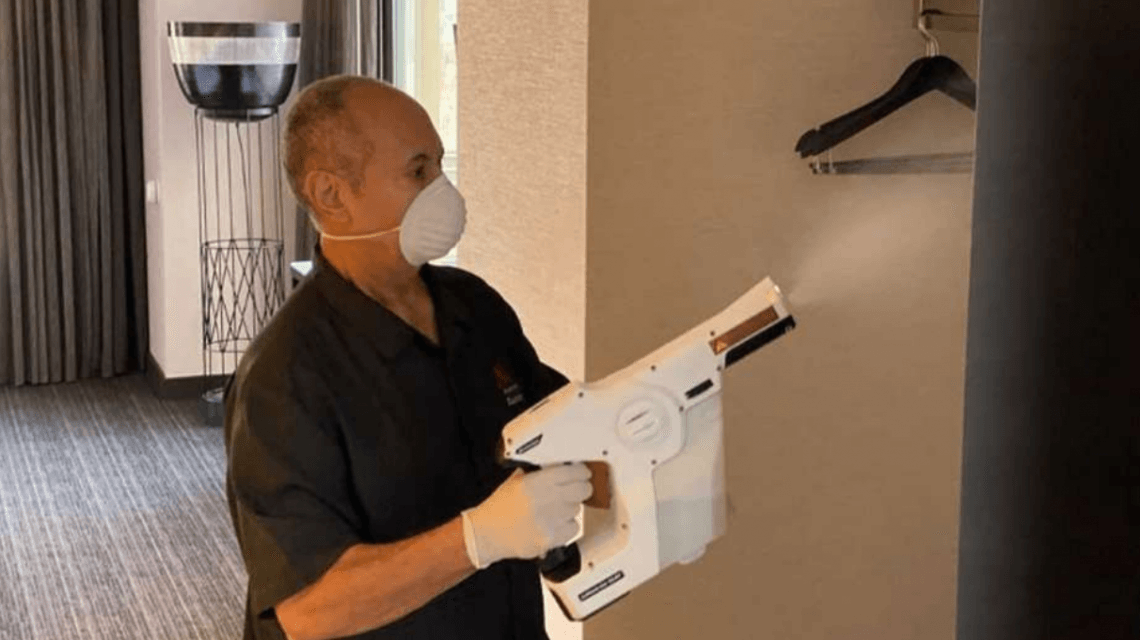
•Use electrostatic sprayers to further disinfect these surfaces as well as surrounding areas.
Remember, we are all in this together, so we must all do our part to preserve health. To help protect building occupants, building owners and managers can also take these steps:
•Affix signage next to commonly touched switches such as light switches, asking building users “not to touch” or to leave “on.”
•Install movement detectors or voice-activated controls to turn lights on and off.
•Make sure wall-mounted hand sanitation dispensers are located throughout the building.
•Consider removing doors where possible; this makes one less thing building users need to touch.
•Look into hands-free door opening systems. Some examples are listed here. (We are not recommending any of these products; we just want you to know they are available.)
•Remove any shared phones; encourage everyone to use their mobile phones.
•Eliminate chalkboards (whiteboards) along with pens, markers, and erasers. Most presentations can be handled electronically today.
•Remove any unnecessary common-area furniture, including fabric furniture. Pathogens can collect on furniture, especially the tops and sides of chairs. Fabric furniture can be harder to clean and cannot be disinfected, only sanitized.
•Discourage the use of shared electronics such as copiers and fax machines.
•All restroom fixtures should now be touchless. We have been heading in this direction for years, but now we must speed this along. Further, look for ways to remove doors from restrooms or keep them ajar, to make them touchless.
While this looks like a long list, these are just a few actions we suggest building owners and managers consider taking to keep frequently touched surfaces from enabling the disease to spread. We now work with many facilities, helping owners and managers identify high-touch surfaces – many of which they were unaware of before – and recommending steps to help stop the spread of the disease.
If we can help you, contact us here.
We are infection control experts, here to help building managers keep their facilities cleaner, healthier, greener, and safer, in the most cost-effective ways possible. To learn more about Secure Clean, contact us at 888-609-1410.