While this technology is not necessarily new, having been developed years ago, it is getting a major new lease on life because of the pandemic.
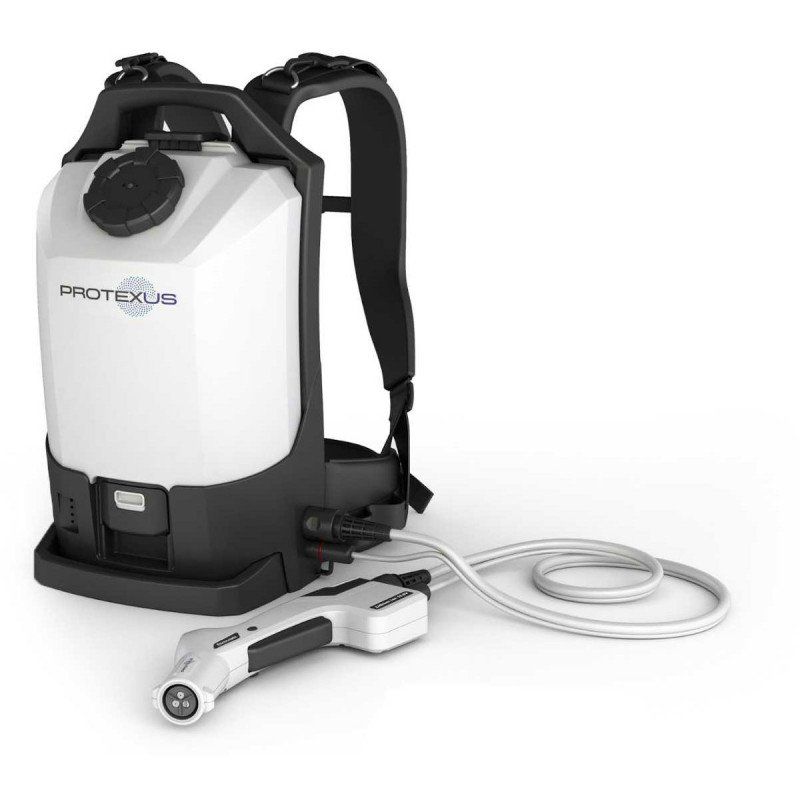
One of the most effective technologies the professional cleaning industry has today, to help prevent the spread of coronavirus, are electrostatic sprayers. We use them in many of the locations we clean, and they are part of our infection control program
outlined on our website. We believe they have helped us tremendously in keeping our client’s facilities safe and healthy during this challenging period.
outlined on our website. We believe they have helped us tremendously in keeping our client’s facilities safe and healthy during this challenging period.
While this technology is not necessarily new, having been developed years ago, it is getting a major new lease on life because of the pandemic. And now, we are starting to see test results and studies that prove just how effective these systems are.
One of the most recent was published in the August 2020 issue of the American Journal of Infection Control. Entitled, “Evaluation of an electrostatic spray disinfectant technology for rapid decontamination of portable equipment and large open areas in the era of SARS-CoV-2,” the study was performed at the Cleveland Veterans Affairs Medical Center, where “shared equipment,” such as wheelchairs and waiting room chairs, are used by many people during the course of the day.
According to the researchers, these chairs are “an unappreciated source for the spread of respiratory viruses, including severe acute respiratory syndrome coronavirus.” They are not cleaned as often as they should be, and when they are cleaned, it is typically by the manual application of disinfectants.
“Thoroughness of manual cleaning is often inadequate, and application can be challenging and time-consuming, particularly when surfaces are irregular or large open areas are being clean,” reported the researchers.
Before examining the study and its results, let’s make sure we all understand what electrostatic sprayers are. In a previous blog, we referred to them as “misting systems.” What they do is apply an EPA N-list
disinfectant, one that has been tested and certified to kill the pathogens that cause coronavirus on surfaces. The disinfectant can be applied to counters, walls, fixtures, door handles, ledges, desks, even such things such as the exterior of books on shelves in a library.
disinfectant, one that has been tested and certified to kill the pathogens that cause coronavirus on surfaces. The disinfectant can be applied to counters, walls, fixtures, door handles, ledges, desks, even such things such as the exterior of books on shelves in a library.
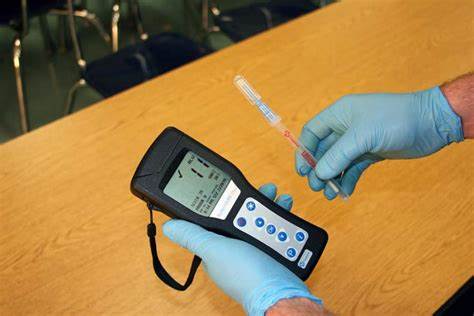
Now that we have a better idea of what electrostatic sprayers are, we can take a closer look at this study. Several chairs in the hospital were coated with a bacteria that could prove harmful if touched or consumed. Cleaning workers were not told which chairs contained the bacteria. Some of the chairs also had visible soiling. Those were cleaned first using a commercial hydrogen peroxide wipe before the electrostatic sprayers were used.
“The spray disinfectant was then applied, just once, to all surfaces in accordance with the manufacturer’s instructions and allowed to air dry,” according to the report. “After spraying, all surfaces remained visibly wet for 2 minutes or longer. Horizontal surfaces typically remained wet for at least 5 minutes, but areas at the periphery began to appear visually dry within 2 minutes.”
Cultures were collected before
spraying the surfaces and again after
spraying the surfaces. These were the results:
spraying the surfaces and again after
spraying the surfaces. These were the results:
•Before spraying, nearly 50 percent of the cultures indicated that different bacteria and pathogens were present on wheelchair and waiting room chair surfaces.
•After spraying, the researchers found only about six percent of the cultures proved positive, meaning 94 percent of the pathogens had been killed or deactivated (no longer harmful to humans).
They then looked for specific types of germs and bacteria, for instance, c.diff, Gram-negative bacteria, which is resistant to most available antibiotics, and MRSA. In each case, after spraying the chairs, the percentage of the cultures that still contained these germs and bacteria were reduced significantly, and in some cases, killed entirely on the test surfaces.
” In summary,” the researchers concluded, “our results suggest that the application of a [EPA-registered] disinfectant using an electrostatic sprayer could provide rapid and effective decontamination of portable equipment and large open areas.”
This is our conclusion as well. Further, it explains why we stand behind our infection control program, not only during this pandemic, but always, to keep our client’s facilities healthy.
We are infection control experts, here to help building managers keep their facilities cleaner, healthier, greener, and safer, in the most cost-effective ways possible. To learn more about Secure Clean, contact us at 888-609-1410.
Study Source:
Cadnum JL, Jencson AL, Livingston SH, et al. Evaluation of an electrostatic spray disinfectant technology for rapid decontamination of portable equipment and large open areas in the era of SARS-CoV-2. Am J Infect Control. 8-2020