The big question now is what are we going to do with these empty malls?
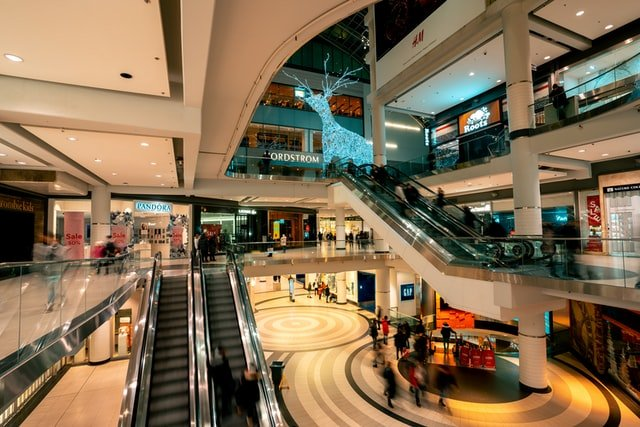
If you grew up in the 1980s into the 1990s, then you remember shopping at the mall was nothing less than a magical experience. Many of us met our friends there and would hang out for the entire afternoon. Plus, we would go shopping.
But few of us are shopping in malls any longer. Everything started to change in the early 2000s, and with the pandemic, this has been accelerated.
Not that long ago, IBM estimated that malls and traditional retail stores would last another ten years, at least as we know them today. But because of the pandemic, they have revised their estimate to about five years.
As to what is happening to all the stores we once found in malls, some are surviving, but many of them are gone forever. Those that survive will find a happy balance between being able to market their goods both online and on-site, in their traditional retail settings.
But the big question today is what we will do with malls that do not make it. The consultancy firm, GlobalData, estimates that about half of the malls in the U.S. will be closed in the next five years.
So, what is to come of these large facilities, many of which were 300,000 square feet or more with huge parking lots for thousands of cars. What is being implemented is what management companies are now calling “adaptive reuse.” Malls are being repurposed along with vacant retail spaces. They are being converted into one or more of the following:
·Giant data centers.
·Casinos, where legally possible.
·Enormous food halls. With the stores out of the way, entire malls are being converted into food halls that bring together multiple food-related boutiques and eateries.
·Libraries and museums.
·Gyms and houses of worship.
·Apartments and hotels.
·Schools.
·Senior housing.
In Rochester, NY, a giant mall is being converted into a hospital. A former Sears store, for instance, has been turned into an ambulatory surgery center. Clinical exam rooms, operating rooms, sports medicine departments, and most all the other types of rooms you would find in a conventional hospital are now housed in this former mall.
However they are repurposed, infection control measures will be a primary concern. Mall owners and managers realize that the only way they will be able to get people using these facilities once again is if they feel safe in them.
To accomplish this, some of the steps they are taking are as ingenious as they are practical. For instance:
·In food halls, if chairs are leaning against tables, it means that the chair and the table have been sanitized and are ready for use.
·Some malls are providing customers with thin, easy to put on/easy to take off disposable gloves to wear while in the mall.
·Hand sanitation stations are everywhere.
·Mall owners and retailers are restricting how many people can enter the mall or enter stores at one time.
·Partitions are in place to help separate people in more congested walkways. In addition, arrows are placed on floors to indicate proper spacing and direction of foot traffic.
·Chairs and couches have been removed to eliminate crowding and congestion.
·To accommodate social distancing, walkway vendors are gone. This prevents congregating in the pathways.
·Cleaning is constant. Anything that is or could possibly be touched is cleaned and sanitized throughout the day.
As to cleaning, mall owners and managers are also reviewing all cleaning protocols, methods, and products. Cleaning contractors are being asked to revise their contracts, putting much more emphasis on infection control measures. Invariably, this includes the use of such systems such as the EvaClean Protexus
disinfecting system used by Secure Clean.
disinfecting system used by Secure Clean.
These systems apply an electrically charged mist over surfaces. The charge assures the mist adheres to all surfaces and the disinfectant used is designed to kill the pathogens that cause coronavirus. Together, they are the most powerful weapons we have to fight this disease, influenza, norovirus, and a number of other illnesses caused by bacteria, viruses, and fungus.
We are infection control experts, here to help building managers keep their facilities cleaner, healthier, greener, and safer, in the most cost-effective ways possible. To learn more about Secure Clean, contact us at 888-609-1410.