Electrostatic sprayers (misters) have become one of the most effective ways cleaning contractors have to stop the spread of infection in facilities if we use the right disinfectants.
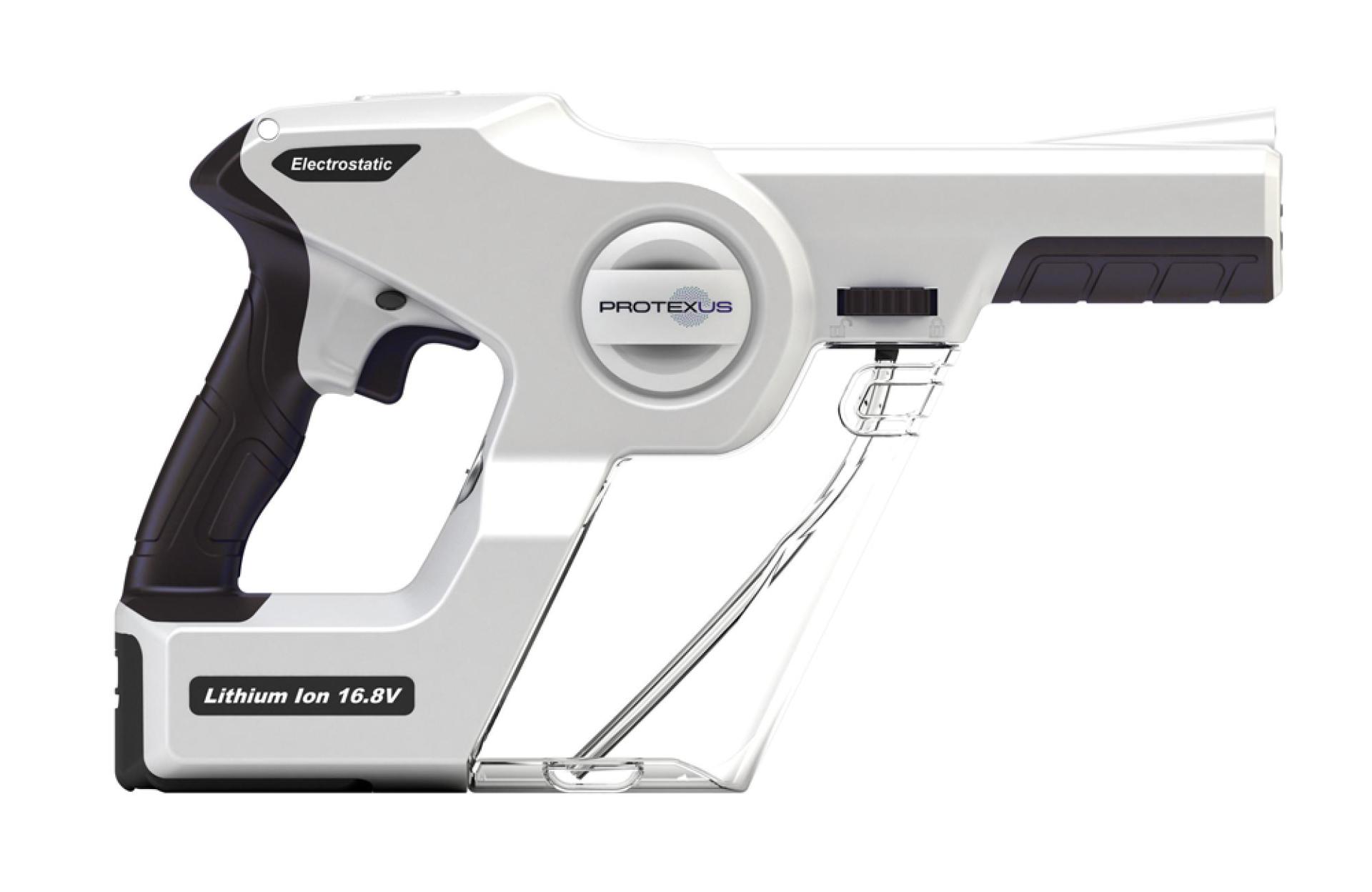
As we mentioned in an earlier blog posting, electrostatic sprayers (misters) have become one of the most effective ways cleaning contractors have to reduce, if not eliminate, the spread of infection in facilities. And this includes the spread of coronavirus.
Essentially, these systems offer a new way to apply disinfectants to surfaces. As the disinfectant leaves the sprayer, an electrical charge is placed on each droplet. As the cleaning professional walks through a facility, waving the sprayer towards surfaces to be disinfected, these charged droplets become airborne, attach, and then wrap around surfaces, covering all sides of the surface including the backs and undersides.
The droplets form a thin layer on the surfaces, which helps prevent the build-up of germs and bacteria for as much as 90 days.
Not only are electrostatic sprayers a new and effective way to kill pathogens on surfaces, they are also a much faster way to apply disinfectants to surfaces and are certainly more thorough. However, their effectiveness is very dependent on the disinfectants used in these machines. This is something both building owners and managers, as well as all cleaning professionals, should be aware of.
The first thing we should know is that only N-list disinfectants should be used. These are disinfectants that have been evaluated by the EPA and proven to be effective at killing (deactivating) the pathogens that cause COVID.
Next, we should know that there are two types of disinfectant chemistries – NaDCC and PAA (Peracetic Acid) – commonly used with these machines. Always check with the manufacturer as to which disinfectant should be used. In some settings, for instance in healthcare or food service, a specific disinfectant may be required.
However, for use in most of the facilities we clean, we selected the first one listed below – NaDCC – to be used with our electrostatic infection control system. The following comparison of these chemistries should help explain why:
NaDCCPAA
CONTACT TIME TO KILL BACTERIA
NaDCC 4 minutes
PAA 3 minutes
REMAINS ON SURFACES TO KILL PATHOGENS
NaDCC Yes
PAA No
TESTED FOR EFFICACY TO MEET EPA STANDARDS
NaDCC Yes
PAA No
pH (too alkaline or acidic can be damage surfaces)
NaDCC Neutral
PAA Highly acidic
PACKAGING CAN BE RECYCLED
NaDCC Yes
PAA No
TOXICITY TO FISH AND AQUATIC LIFE
NaDCC None
PAA Yes
CAN BE USED WITH MOPS AND WIPES
NaDCC Yes
PAA No, except for microfiber
EASE OF MIXING
NaDCC Easy
PAA Difficult
POSSIBLY HAZARDOUS TO MIX
NaDCC None
PAA Yes
SHELF LIFE OF CONCENTRATE
NaDCC 3 years
PAA 1.5 years
As you can see by these comparisons, the disinfectants we selected for use with our electrostatic systems are overall more effective, more thorough, and safer for the user, building users, and the environment.
Due to the seriousness of this pandemic, we cannot take any chances. However, we still want to protect our staff and your building users, as well as our environment. Electrostatic sprayers using NaDCC disinfectants accomplish this.
We are infection control experts, here to help building managers keep their facilities cleaner, healthier, greener, and safer, in the most cost-effective ways possible. To learn more about Secure Clean, contact us at 888-609-1410.