Coronavirus is not the only disease outbreak that could have been minimized, and possibly eliminated with effective cleaning. Here are five others.
Most of us know that effective cleaning and disinfecting are two of the best ways to reduce the spread of coronavirus. In fact, currently, they are two of the best tools we have.
However, coronavirus is not the only disease outbreak that could have been contained, minimized, and possibly eliminated with effective cleaning. Here are five others you should know about.
1. 1918: Spanish Flu Pandemic
This is the big one we hear so much about. The year was 1918, and waves of mutating influenza viruses swept through the U.S., Europe, and armies fighting in World War I. To call it the “Spanish Flu” was a misnomer. It is believed to have started at an army base in Kansas.
This flu outbreak orphaned children, closed schools and businesses, and left nations without essential services due to ill workers. An estimated 675,000 Americans died in a matter of months. Approximately 20 million people died across the globe before the pandemic subsided.
We know facilities were taking steps to stop the spread of the infection using the cleaners and disinfectants available at the time. However, they were not used as much as necessary, were not always used properly, or were simply not as effective as hoped.
2.) 1952: Polio Epidemic
Polio is a viral disease that affects the nervous system. The first major polio cases in the United States occurred in 1916. In the 1940s and ’50s, polio outbreaks created a frenzy, peaking around 1952.
Polio is spread through contact with stool from an infected person. It is typically spread in three ways:
•Eating food contaminated with the poliovirus
•Touching contaminated surfaces and then touching your mouth, eyes, or nose, a pattern shared with many other viruses and diseases.
•Sharing food or utensils with someone that is infected with the poliovirus.
3.) 1957 Flu Epidemic
It does not get much notice today, but in 1957, an influenza virus outbreak in Asia soon spread worldwide. Like the coronavirus, this virus was carried first by animals and soon spread to humans.
Estimates as to how many people contracted this virus and how many died are guesstimates at best. However, it is believed that as many as two million people died from the 1957 flu. It would have been even worse if a vaccine had not been developed relatively quickly.
4.) Norovirus
The norovirus, usually associated with international cruises, is a virus that is transmitted through contact with an infected person, contaminated food or water, or a contaminated surface. Many think the norovirus is an illness that is picked up at sea. However, there are far more cases on land than on water. Also, it is seasonal, surfacing from about November through March each year.
Norovirus has never reached the point of being a pandemic. Further, it usually comes and goes in a few days, but those few days can be very debilitating.
5.) Legionella
Some of us believe legionella, also knowns as legionnaires disease, is behind us. Not so. It is estimated that each year in the U.S., about 5,000 people are diagnosed with Legionnaires. In 2018, there were 10,000 cases. Further, about one in ten of these people will die of the disease.
Here is something else you may not know. While it is often spread by inhaling the bacteria that causes the disease, these bacteria droplets can also land on surfaces. If these surfaces are touched and we then touch our face or food, the bacteria can spread, potentially causing someone to become ill with the disease.
As to the coronavirus, our sixth disease outbreak, it was on January 9, 2020, that the Chinese state media first reported a mysterious viral outbreak in Wuhan. This was not big news at the time. “Novel” viral outbreaks are not uncommon in China.
But what made this one different was how fast it spread. In two weeks, the virus was noted in South Korea and Japan. What is also making it different is how many deaths it has caused – and still counting.
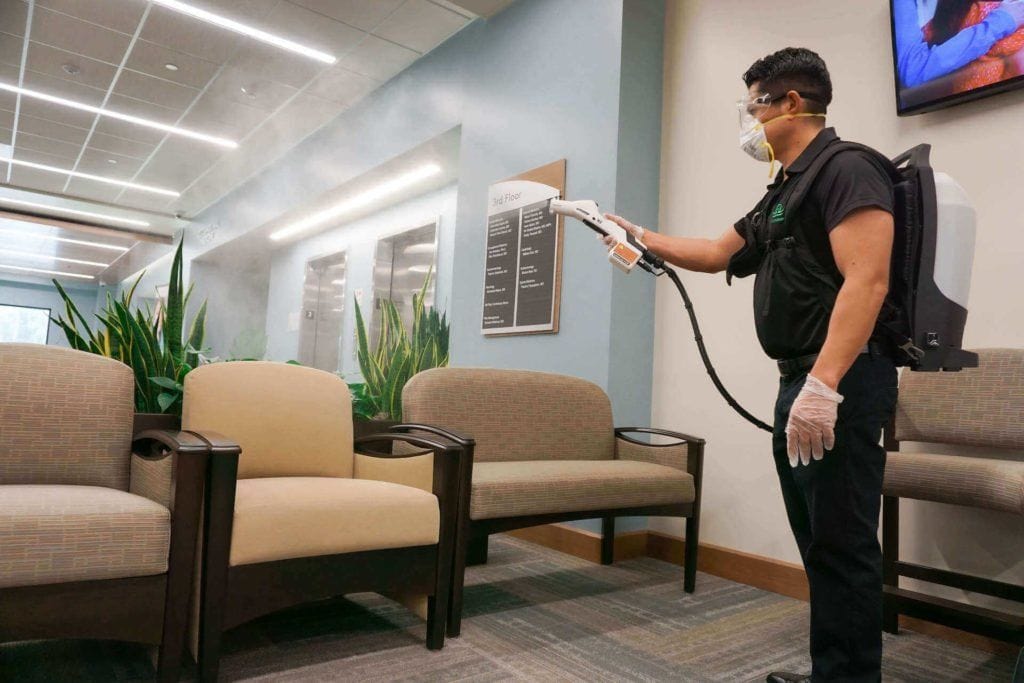
All these outbreaks could have been prevented or at least minimized through effective cleaning and disinfecting. Further, today we have many more tools, many high-tech and highly effective cleaning tools, to help us fight and prevent the spread of infections.
Make sure your cleaning contractor is aware of these technologies, and even more important, is using them.
We are infection control experts, here to help building managers keep their facilities cleaner, healthier, greener, and safer, in the most cost-effective ways possible. To learn more about Secure Clean, contact us at 888-609-1410.