Desk Shields can prove so effective that employers often can protect their staff without placing desks six feet apart
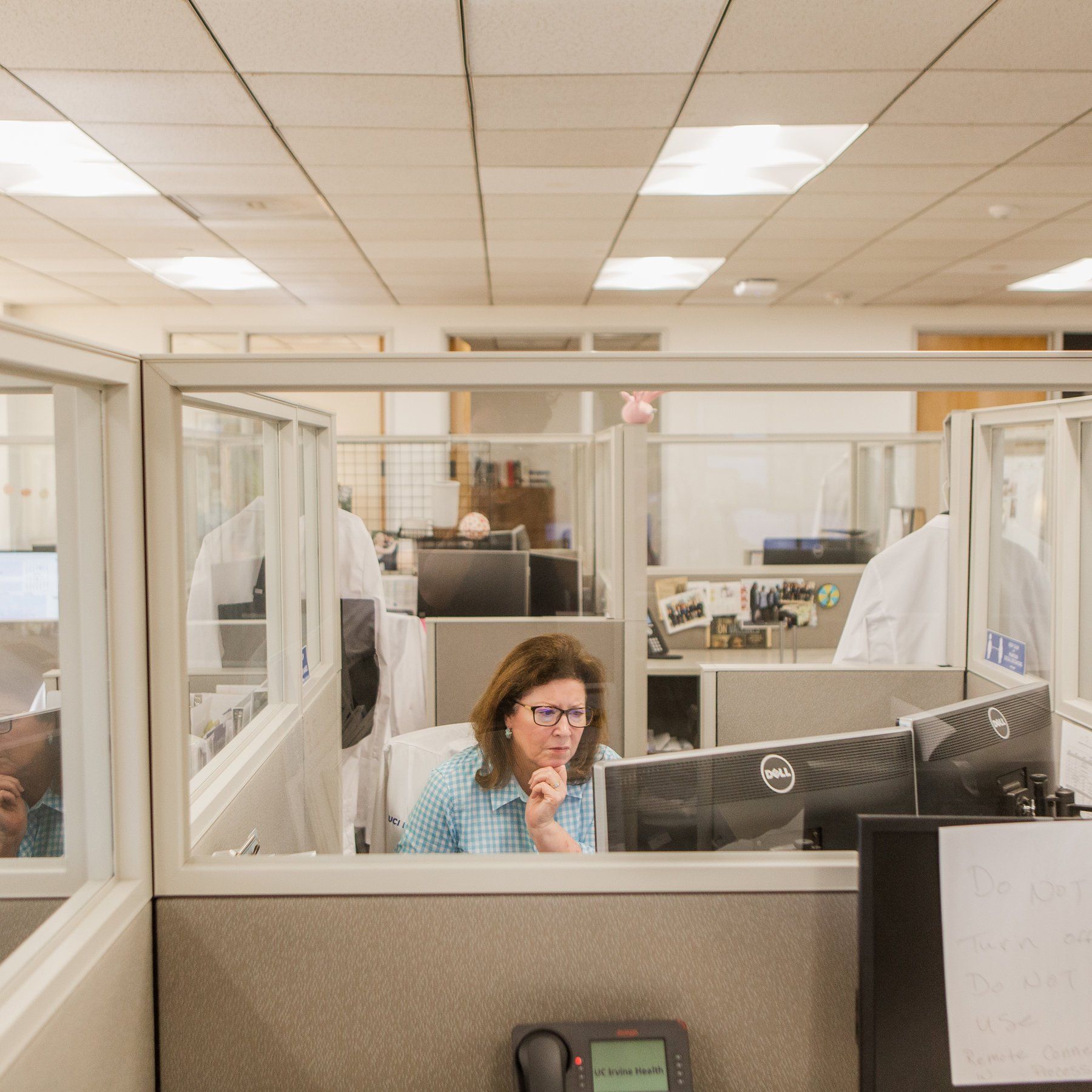
Here’s what’s happening around the country. Many companies, especially larger organizations, are asking their remote working staff to come back to work in the office. Several are doing this in stages, for instance, requiring just a percentage of workers to return at a time. They are doing this in increments to make sure the COVID-related safety precautions they have implemented are sufficient.
However, an issue many are encountering is that they cannot always place desks six feet apart. Further, studies indicate that even if desks and workers are six feet apart, should someone sneeze, droplets of that sneeze can become airborne and travel considerably further than six feet. This means, if that sneeze contains coronavirus, the germs to several others in the work area.
So, what are the options?
One option is to install sneeze guards – plastic or glass shields – around desks and work areas. We see these now in grocery stores and banks, separating tellers and customers, for their mutual protection.
These can prove so effective that by installing sneeze guards around desks, employers often can effectively protect their staff without placing desks six feet apart, however, it is still recommended to do so.
But before ordering shields for your work area, there are several things to consider. Among them are the following:
Design Issues
When installed on a desk, the sneeze guard should be tall enough and wide enough to cover three sides of the desk, totally protecting the worker when they are seated. However, if someone is also standing while at their desk, it may be necessary to install a much taller shield, five to six feet high, to ensure complete protection.
Quality
Installation can take time. Because these shields may need to be installed around many desks and in different parts of a work area, it is best to select higher quality shields. Higher quality shields will last longer and not need to be replaced as frequently. Further, a less expensive shield may not withstand regular cleaning, may become cloudy after cleaning, or be easily scratched.
Materials
Most shields are made of tempered glass or plexiglass, constructed with polycarbonate. Polycarbonate is harder to damage or scratch, is easier to clean, and resistant to many types of cleaning solutions. Further, these are lighter than glass, making them easier to install.
Framing
When installing a shield, it is best to have it framed. A metal frame helps protect the guard and ensures it stands correctly. Shields connected to the side of a desk, for instance, tend to lean in one direction or another over time. Framing will prevent this. Further, it is usually easier to clean a shield when it is framed. As to the frame itself, make sure it does not have any gaps or openings. Bacteria can build up in these areas.
Cleaning
Keeping shields clean is crucial. If the shield is tempered glass, a regular, window cleaner should do fine, but most are Plexiglas or Lexan polycarbonate. The Centers for Disease Control and Prevention also recommends using hydrogen peroxide cleaning agents to help disinfect the shield.
We have found that cleaning the shields with a peroxide based cleaner that does not streak or leave a film effectively reduces the colonization of any viruses or bacteria that may build up, which is important even though the shields are typically not touched.
For added protection, after the shield has been cleaned, it should be misted with an electrostatic sprayer, at the same time the entire workstation is being misted and disinfected. Doing so will ensure the entire shield and the frame are adequately disinfected, helping to protect the health of this worker as well as those nearby.
We are infection control experts, here to help building managers keep their facilities cleaner, healthier, greener, and safer, in the most cost-effective ways possible. To learn more about Secure Clean, contact us at 888-609-1410.