If taking bids for a new cleaning contractor in 2021, be prepared: just like everything else, the whole process has changed.
If you are taking bids for or are hiring a new cleaning contractor in 2021, be prepared: just like everything else since COVID, the whole process has changed.
For instance, what if someone working in your facility comes down with COVID and claims this was caused by working in your facility? This is a concern; we know it can and probably has happened. However, currently, there is no clear guidance as to how liable a building owner, manager, or business owner will be should it occur.
Would there be a lawsuit, the courts may have to decide liability and your exposure, which can become a very time consuming and costly process.
Because of this, and due to the many other complicated issues set off by COVID, businesses, building owners, and managers, should investigate the following before hiring a new cleaning contractor:
Proof of insurance.
These policies will be called Commercial Liability or General Liability (GL), and they cover bodily injury and property damage. Your contractor must carry this insurance.
These policies will be called Commercial Liability or General Liability (GL), and they cover bodily injury and property damage. Your contractor must carry this insurance.
The insurance fine print.
GL policies can be confusing with several exclusions, many designed to minimize the liability of the insurance company and that of the contractor. This may leave you—building or business owner—at risk should someone become sick with the disease.
GL policies can be confusing with several exclusions, many designed to minimize the liability of the insurance company and that of the contractor. This may leave you—building or business owner—at risk should someone become sick with the disease.
Their QC Program.
You might be asking what a QC program is. Many contractors do not have one or were never asked to provide one before COVID. A QC or Quality Control program typically involves items such as the following:
You might be asking what a QC program is. Many contractors do not have one or were never asked to provide one before COVID. A QC or Quality Control program typically involves items such as the following:
•Updates on training programs offered custodial workers.
•Regular (monthly/quarterly) facility visits to meet with clients and perform facility inspections during business hours.
•A system of tracking customer requests and confirming those requests have been addressed.
•Establishing key performance indicators, such as how customer complaints have receded over a set period.
•Quarterly inspection reports.
•A quick and easy way to contact the contractor or provide feedback.
Their worker health screening program. Contractors should now require that their workers have temperature checks each day before beginning their shifts. Workers must also note if they feel ill or anyone in their family is sick. This information should be documented and available to you whenever requested.
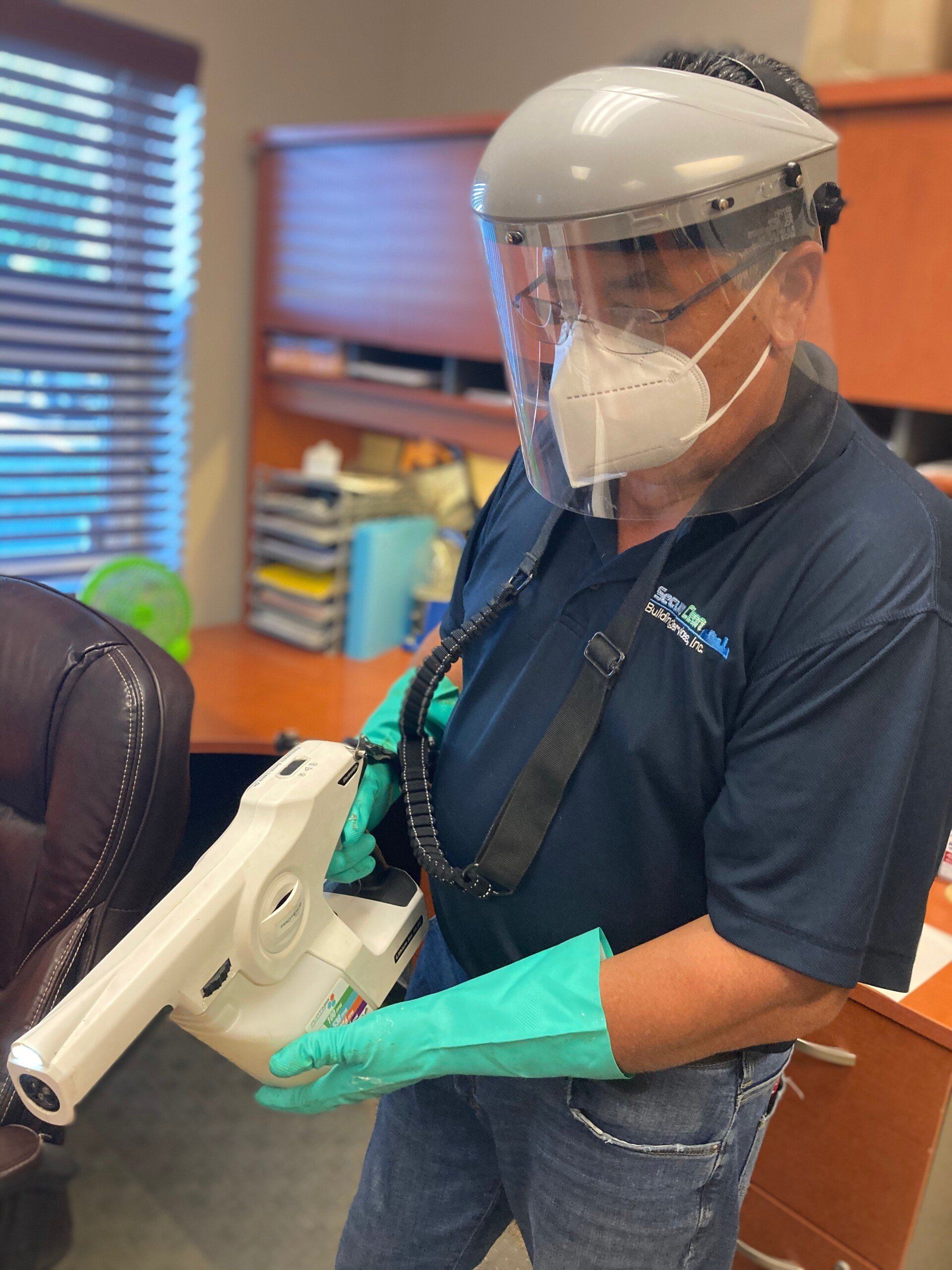
Cleaning procedures implemented or updated due to COVID. It’s particularly important for you to know what steps they are taking, especially when it comes to infection control. For instance, some astute cleaning contractors are now using electrostatic spraying systems, proven to help stop the spread of coronavirus. Others have set up ongoing training programs, instructing their staffs on proven cleaning and disinfecting strategies, which must be adhered to now because of the disease.
What disinfectants are they using in the facility? In our more than 45 years in business, rarely has a customer asked us to provide the names of the disinfectants we are using in their facilities. Now they must. As discussed in other posts, the disinfectants used must be EPA-registered and proven to eliminate the pathogens that cause the coronavirus.
Finally, don’t stop with just the disinfectants. Ask for a list of all the cleaning solutions, tools, and equipment used to maintain the property.
Further, question if the contractor will be using an auto-dilution system to mix cleaning solutions and disinfectants. This helps ensure cleaning solutions are correctly mixed, so they work more effectively and do not leave a chemical residue. Additionally, look to see if the vacuum cleaners used in your facility have HEPA filtration or something similar. These filters can trap and capture the pathogens that cause coronavirus.
Finally, it’s best that the cleaning tools used in your facility are used only in your facility. This is a preventive measure. Pathogens can collect on some cleaning equipment and travel from one location to another.
The Secure Clean blog is designed to help building managers address the COVID-19 pandemic and keep their facilities cleaner, healthier, and safer, in the most cost-effective way possible. To contact call 888-609-1410.