To help stop the spread of infection, facility managers must be aware of what quat binding is.
Many disinfectants used every day to keep facilities clean and healthy are made with quaternary ammonium chlorides, or “quats.” These are the active ingredients in scores of different types of disinfectants designed to eliminate germs and bacteria on surfaces. And if it is an N-List disinfectant, it means that the quat modules in the disinfectant have been tested and proven to eliminate the pathogens that cause the coronavirus.
However, building owners and managers need to know that something called “quat binding” can occur, and when it does, the effectiveness of these disinfectants can diminish considerably. To stop the spread of the coronavirus, quat binding is something we must prevent.
Here’s what’s happening.
Quats are “positively charged” molecules attracted to the negatively charged fibers found in most types of traditional wiping cloths. This includes paper towels and disposable wipes used in cleaning. They contain wood pulp that is negatively charged. This also includes traditional cotton cleaning cloths and rags. As quats bind to the wipes, the disinfecting solution begins to lose its effectiveness.
Here’s the proof.
In a test, a pail is filled with one gallon of water properly diluted with a quat-based disinfectant. The quat level—indicating the effectiveness of the disinfectant in the pail—measures 800 parts per million (PPM) when the test begins.
A traditional cotton cleaning cloth is then placed into the solution to soak for 10 minutes.
After 10 minutes, the solution is tested again, and now the quat level has fallen to just 400 PPM.
This tells us that the pathogen-eliminating power of the disinfectant has been cut in half—a perfect example of what quat binding is all about.
Here’s How Secure Clean Prevents Quat Binding
First, we make sure our cleaning staff uses only microfiber cleaning cloths and we have the equipment in-house to properly launder microfiber towels. We do not use the traditional cotton cleaning cloths, such as those used in the test just discussed, nor do we use paper wipes when disinfecting surfaces.
But that’s not all. We also do the following:
•Our staff uses one set of microfiber cloths for cleaning and another set for disinfecting. This helps minimize the use of the microfiber cloths and helps prevent the possibility that contaminants will be spread over a surface.
•We make sure all surfaces are cleaned first before applying the disinfectant. This helps ensure the disinfectant works most effectively.
•We spray the disinfectant directly onto surfaces and then wipe clean. Disinfectants sprayed directly onto surfaces have a greater chance to work without their effectiveness being hampered.
•The manufacturer’s suggested dwell time is always followed. Our staff is taught that the manufacturer has tested their disinfectants under different conditions and to follow their guidance.
•We change the microfiber cleaning cloth frequently. The more soiled the cleaning cloth becomes, the less effective the disinfectant is at eliminating germs. Further, a soiled cloth can spread contaminants.
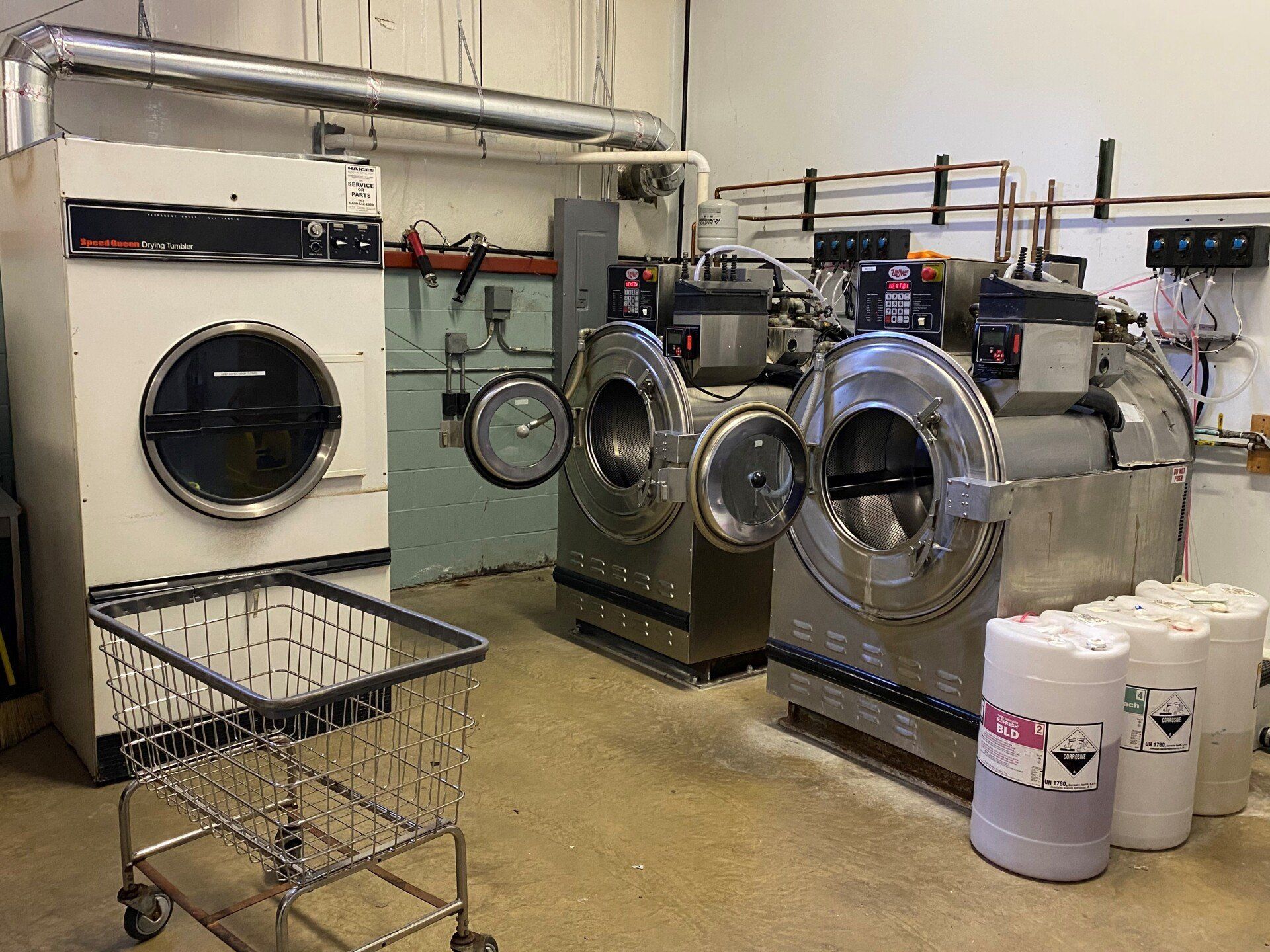
• We wash them in special washing machines to that help us prevent quat binding from developing.
•We use different types of disinfectants. Not all disinfectants are made with quats. Some alternatives have proven to be just as effective. We also investigate “green” disinfecting alternatives such as the use of hydrogen peroxide.
But we also go further than this. Because properly and effectively disinfecting surfaces is crucial today due to the coronavirus, we often take the next step and use electrostatic sprayers on a wide range of areas in the facilities we clean. This includes workstations, counters, restrooms and restroom fixtures, walls, and even floors.
This added step ensures our customers’ facilities are not only clean but healthy, of paramount concern today as people start going back to work and school and enjoying their lives once again.
The Secure Clean blog is designed to help building managers address the COVID-19 pandemic and keep their facilities cleaner, healthier, and safer, in the most cost-effective way possible. To contact call 888-609-1410.